

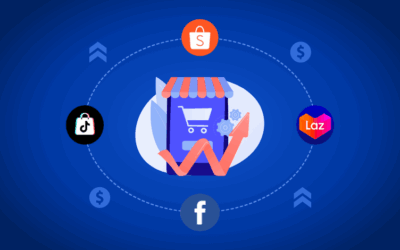
For many entrepreneurs, the natural first step is to launch an online business. E-commerce platforms like Shopee, Lazada, and TikTok Shop make it easy to reach customers, test products, and generate revenue without the heavy overheads of a physical store.
But as competition grows, purely online brands often hit a growth ceiling. Scaling from online to offline—through pop-up stores, retail partnerships, or flagship outlets—has become a powerful strategy to break through that ceiling. This Online-to-Offline (O2O) approach blends digital convenience with in-person experiences, creating trust and unlocking new growth opportunities.
So, how can brands successfully make the jump? Let’s explore the benefits, strategies, and tools you’ll need.
Why O2O is the Future of Retail
The e-commerce industry is booming, but consumer behaviour shows that customers still value offline touch-points. According to global retail studies, over 70% of shoppers research online before buying offline (ROBO), while others use offline browsing to inform online purchases.
• Trust Factor: A physical store reassures customers that your business is real and dependable.
• Tactile Experience: Especially for fashion, beauty, and electronics, customers want to touch, test, or try products before buying.
• Hybrid Journey: Customers no longer shop in a linear way. They might see your ad on Instagram, browse your products online, and then complete the purchase in-store—or the other way around.
Brands like Warby Parker, Nike, and Xiaomi started online but opened physical outlets to capture these hybrid journeys. For SMEs and growing brands, O2O is not just an opportunity—it’s the next logical step.
Benefits of Expanding from Online to Offline
- Boosts Credibility
A physical presence signals stability. Customers feel safer buying from a brand they can “see” in real life. - Reduces Return Rates
When shoppers can try before they buy, they’re more confident in their purchase—leading to fewer returns and refunds. - Opens New Acquisition Channels
Offline exposure attracts customers who may not shop online but will buy once they’ve experienced the brand in person. - Stronger Customer Relationships
Offline experiences—events, pop-ups, or even face-to-face customer service—help build loyalty and brand love.
Practical Steps to Scale from Online to Offline
Scaling doesn’t mean you need to jump straight into opening a full-fledged retail store. Start small, experiment, and grow strategically.
- Start with Pop-Up Stores
Pop-ups allow you to test different locations, measure demand, and gather feedback before investing in permanent retail. They also create a sense of urgency and exclusivity.
💡 Example: A skincare brand could launch a weekend pop-up at a mall, paired with online promotions for attendees who scan a QR code. - Partner with Existing Retailers
Collaborate with established stores to place your products on their shelves. This reduces overhead costs while giving you offline visibility.
💡 Example: Local fashion labels partnering with department stores or lifestyle boutiques. - Integrate Online Promotions with Offline Offers
Offer discounts that apply both online and offline, ensuring a seamless experience. For instance, customers who buy online could pick up in-store (BOPIS—Buy Online, Pick Up In Store). - Use Data to Decide Where to Expand
Leverage your e-commerce sales data to identify high-demand regions. Open physical locations where your online orders are already strong.
Tools & Technology to Support O2O Expansion
To make O2O work, you need systems that sync both channels:
- Order Management Systems (OMS)
Syncs inventory between online marketplaces and offline stores, preventing overselling and stock issues. - Unified Marketplace Storefronts
Shopee, Lazada, and TikTok Shop allow sellers to create a consistent brand presence. When paired with offline branding, this builds recognition. - Loyalty Programs
Connect your loyalty rewards across both online and offline purchases. Customers should be able to earn and redeem points anywhere. - QR Codes & Digital Tools
Place QR codes in-store that link to your e-commerce site for easy repeat purchases. Similarly, online shoppers can scan codes to locate nearby pop-ups or outlets.
Case Study: A Local SME Success Story
Imagine a homegrown fashion brand that started selling exclusively on Shopee. After two years of growth, they noticed high order volumes from the Klang Valley area.
Instead of opening a costly flagship, they launched seasonal pop-up booths at malls and bazaars. They promoted the booths online via Instagram and offered exclusive discounts for customers who showed their online receipt at the booth.
The result?
- Offline sales added a 30% revenue boost in just 3 months.
- Brand awareness increased significantly, with many offline visitors later becoming repeat online customers.
- Returns decreased as customers were able to try products in person.
This is O2O in action: online drives offline, offline fuels online.
Challenges & How to Overcome Them
Transitioning isn’t without challenges, but with the right preparation, they can be managed:
- High Setup Costs? → Start with pop-ups or partnerships instead of flagship stores.
- Inventory Management? → Use integrated OMS tools to sync stock in real-time.
- Marketing Complexity? → Build cross-channel campaigns where online ads lead to offline promotions.
- Customer Service Overlap? → Train your team to handle both online inquiries and offline interactions seamlessly.
Conclusion
Scaling from online to offline is not about abandoning e-commerce—it’s about creating a blended customer journey that meets shoppers wherever they are. By building trust offline, you strengthen your online sales. By leveraging online data, you make offline smarter.
The future of retail is O2O, and brands that embrace it will unlock sustainable growth.
👉 Ready to explore O2O strategies for your business?
Talk to O2O Alliance today and let’s build your growth plan together.




 Our Brands
 Web Development
 Ecommerce Solution
 Webstore, Marketplace & Social Management
 Creative Works
 Shopify Development
 Email, Web and Server Hosting
 Online Contest